JEE Study Kit for 2027: notebooks that think like a topper
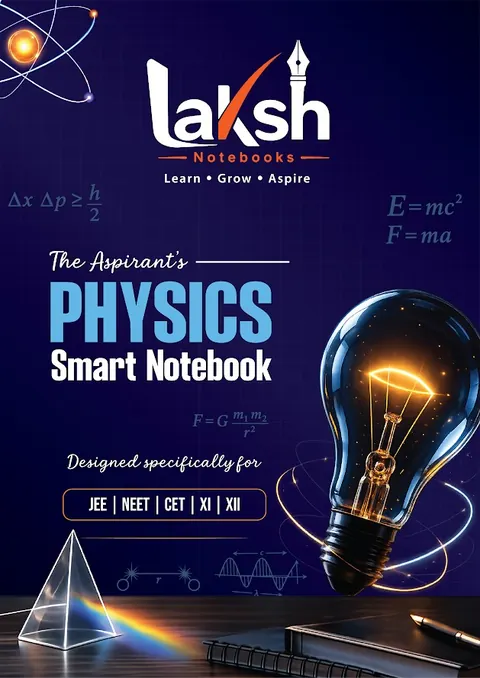
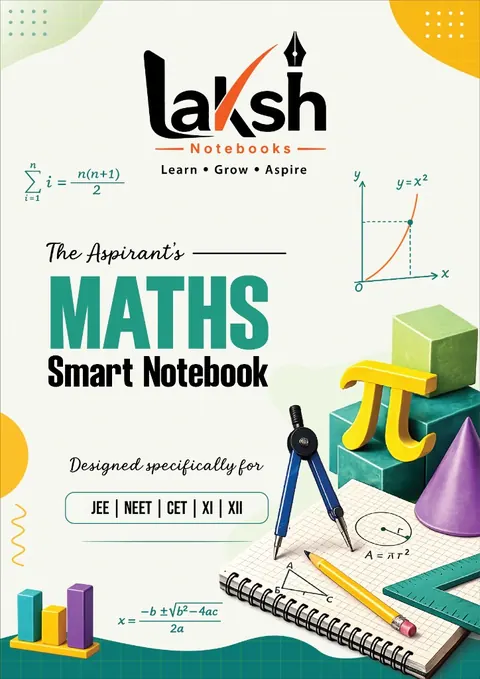
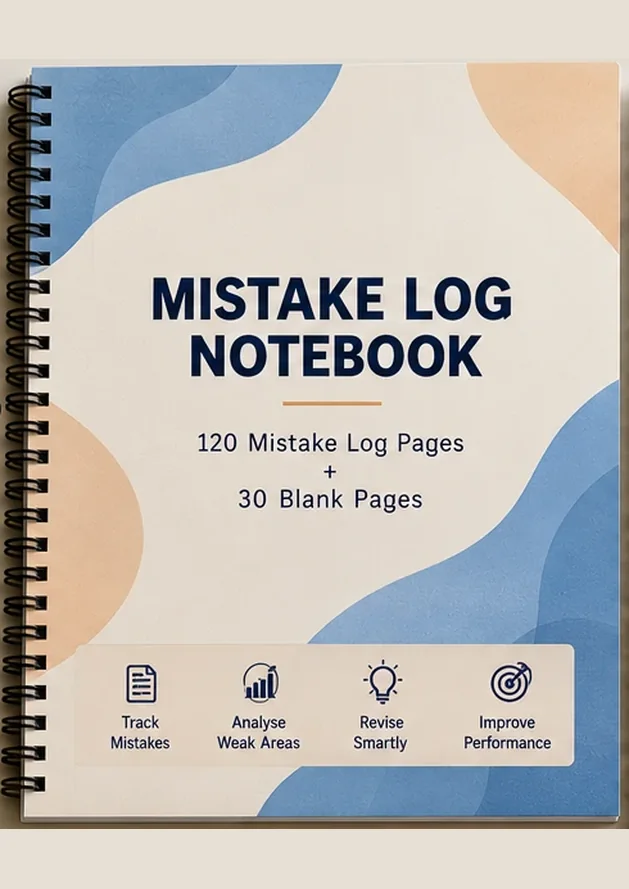
Everything a Class 11 or 12 JEE aspirant needs to write, revise and track: Physics, Chemistry, Maths Smart Notebooks on 80 GSM paper, a Mistake Log Notebook.
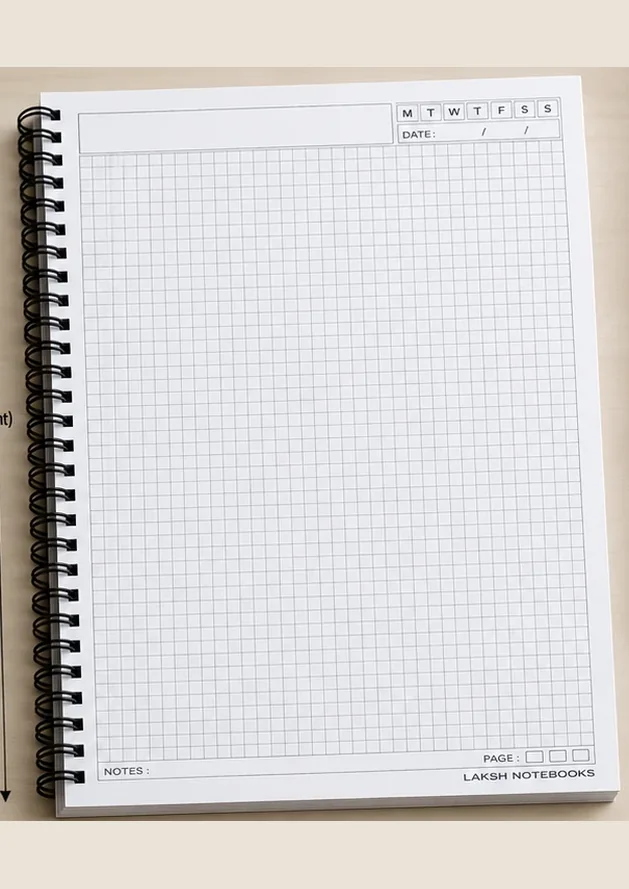
Ruled for derivations and theory, plain for diagrams and structures. 200 or 300 pages per book.
Trackers inside
Chapter tracker, mistake log, mock-test tracker and a daily work and habit tracker in every book.
Formula Vault
Chapter-wise JEE formula sheets and labelled diagrams are in progress.
JEE syllabus
JEE 2027 syllabus: chapter-wise list
The NCERT chapters for Class 11 and 12 Physics, Chemistry, Maths. Use the chapter tracker pages inside the notebook to tick off each one as you learn, practise and revise it.
JEE Physics
Class XI
Units and Measurements
Motion in a Straight Line
Motion in a Plane
Laws of Motion
Work, Energy and Power
System of Particles and Rotational Motion
Gravitation
Mechanical Properties of Solids
Mechanical Properties of Fluids
Thermal Properties of Matter
Thermodynamics
Kinetic Theory
Oscillations
Waves
Class XII
Electric Charges and Fields
Electrostatic Potential and Capacitance
Current Electricity
Moving Charges and Magnetism
Magnetism and Matter
Electromagnetic Induction
Alternating Current
Electromagnetic Waves
Ray Optics and Optical Instruments
Wave Optics
Dual Nature of Radiation and Matter
Atoms
Nuclei
Semiconductor Electronics
JEE Chemistry
Class XI
Some Basic Concepts of Chemistry
Structure of Atom
Classification of Elements and Periodicity
Chemical Bonding and Molecular Structure
Thermodynamics
Equilibrium
Redox Reactions
p-Block Elements (Groups 13–14)
Organic Chemistry — Basic Principles
Hydrocarbons
Class XII
Solutions
Electrochemistry
Chemical Kinetics
p-Block Elements (Groups 15–18)
d- and f-Block Elements
Coordination Compounds
Haloalkanes and Haloarenes
Alcohols, Phenols and Ethers
Aldehydes, Ketones and Carboxylic Acids
Amines
Biomolecules
JEE Maths
Class XI
Sets
Relations and Functions
Trigonometric Functions
Complex Numbers and Quadratic Equations
Linear Inequalities
Permutations and Combinations
Binomial Theorem
Sequences and Series
Straight Lines
Conic Sections
Introduction to 3D Geometry
Limits and Derivatives
Statistics
Probability
Class XII
Relations and Functions
Inverse Trigonometric Functions
Matrices
Determinants
Continuity and Differentiability
Application of Derivatives
Integrals
Application of Integrals
Differential Equations
Vector Algebra
Three Dimensional Geometry
Linear Programming
Probability
FAQ
JEE study kit: your questions
Which notebooks are best for JEE preparation?
Use one notebook per subject (Physics, Chemistry, Maths) so your notes, diagrams and mistakes stay in one place for revision. Laksh Smart Notebooks are made for JEE: 80 GSM paper, ruled or plain pages, 200 or 300 pages, plus chapter, mistake and mock-test tracker pages inside.
How many notebooks do I need for JEE?
Most JEE aspirants use one subject notebook each for Physics, Chemistry, Maths per class, plus a Mistake Log Notebook and an A4 Grid Notebook for graphs and rough work. The minimum order is 3 books, and you can mix any titles.
What does 80 GSM paper mean?
GSM is the paper's weight in grams per square metre. 80 GSM is thicker than everyday school notebooks, so roller and gel pens write smoothly.
Where can I download JEE formula sheets?
The Laksh Formula Vault is in progress: chapter-wise JEE formula sheets and labelled diagrams are being prepared.
Do teachers and coaching institutes get special pricing?
Teachers can get any Laksh product free of cost by contacting customer care. Institutes can order notebooks with a custom cover design by email or WhatsApp.